Want to know how the best farmers make denser, safer, and nutritious forages?
They pay extra attention to dry matter and chop length, measuring throughout the day, and adjust as needed. They’ve got someone assigned to checking these values all day - it’s their top priority, and they speak up when a value isn’t falling within the preset guidelines. Spring crops tend to dry out quickly, and when they get too dry, they’re harder to pack. But you knew that.
After forages pass inspection, they are bladed into a pile or bunker that has been carefully planned and boundaries are marked clearly ahead of time. There’s a blade tractor and an appropriately sized pack tractor (or 2 or 3 or 4, depending on the number of choppers in the field) waiting to layer that forage in - in six inch layers.
That’s the secret - layering just enough to get a dense pack - from the ground up. The more forage is packed and layered, packed and layered, the more money you’ll save after fermentation. Why? Because packing out oxygen is key to better fermentation, less spoilage, more ending inventory, better nutrition, and safer forage piles and bunkers.
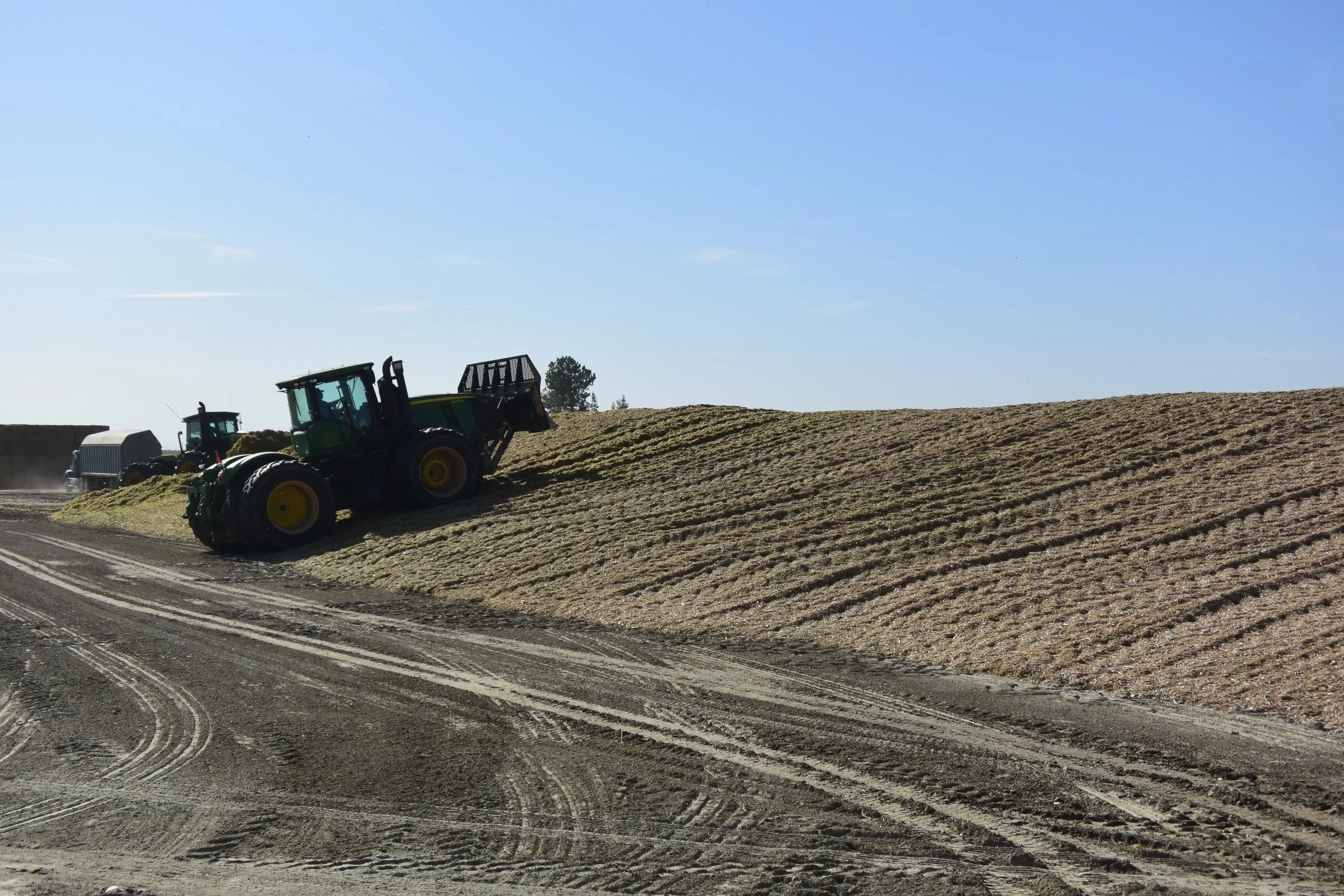
Look at the pile in the photo below: the blade has done the work of layering in, the pack tractor is doing it’s job of packing perpendicular to the blade, staying on the pile to make use of the tractor weight without dragging dirt into the field. There’s no tire tracks that go off the edge of this pile! Forward, reverse, repeat, at an even pace without digging wheels into the surface.
People who do a good job blading and packing are important! Now you know the secret too - if you need help figuring pile or bunker size, pack tractor weight, or have any other harvest question, be sure to call your Sealpro® distributor!