Ben is Correct

Savvy farmers have long known that silage isn't just about what goes into the pile—it’s about what comes out the other side. Yet even with the best timing and harvesting, post-storage shrink can stealthily chip away 10%–20% of your dry matter—and in the worst cases, 15%–30%—turning your hard-earned feed into lost dollars. That’s real money slipping away with every bite your cattle don’t get. Ben Beckman, Nebraska Extension Educator, recently wrote how quickly shrink adds up - and you won’t see it until any covering is removed!

That’s where Sealpro changes the game. With an oxygen-barrier film beneath standard black/white cover (or our new silage felt) it’s possible to slash spoilage to just 8–9% beef.unl.edu. Imagine saving hundreds—or even thousands—of dollars in just one season with smarter protection. You’re not just cutting shrink; you’re reclaiming what you grew, feeding more, and staying one step ahead.

In short, choosing Sealpro Silage Barrier isn’t only practical—it’s proactive. It puts you in the league of farmers who don’t wait to react to problems—they anticipate them, prevent them, and come out stronger for it.

That’s why the smartest farmers are using Sealpro Silage Barrier Films—the oxygen-blocking cover trusted across North America to lock in nutrition and stop spoilage before it starts. University research shows it can cut losses almost in half compared to regular plastic. That means more pounds on the cattle, more milk in the tank, and more money in your pocket.

You don’t have to settle for “good enough.” Sealpro helps you keep the feed you grew—More. Better. Safer.

“For every 1% reduction in shrink, you save $0.60/ton (assuming $60/ton as-fed silage)3. Over 1,000 tons, that’s $600 in feed savings for just 1% reduced. If we improve loss by 5%, we are up to $3,000. So even a modest improvement—like better covering or improved pad drainage—can pay for itself within a single season.”

Multiply that for every ton of silage you make!
— Ben Beckman, UN

Listen In! Harvest Prep Conversation with our Experts

Listen In! Harvest Prep Conversation with our Experts

Ron and Donny share their top tips for silage harvest preparation to help ensure a successful season. They emphasize the importance of testing forage moisture levels regularly to optimize fermentation. Proper equipment maintenance before harvest day is crucial to avoid downtime. Both recommend planning your harvest timeline carefully to match crop maturity and weather conditions. Effective chopping length and packing techniques to minimize air infiltration are key to preserving silage quality. Finally, they stress the value of teamwork and clear communication throughout the process to keep operations running smoothly from field to storage.

May is Mental Health Month - Addiction

We know that agriculture is one of the most, if not the most, deadly occupations. We know that farmers, feedlot owners/managers, their employees, and families live and work with great stress, and some may turn to substances to handle it all. Addiction also affects bankers, lawyers, doctors, teachers - it has no preference. Before they know it, some people get addicted to their “drug of choice,” be it alcohol, prescription, and/or street drugs, and other vices.

Agriculture is also traditionally a “pick yourself up and dust yourself off” industry, where daily shots of whiskey, bottles of wine, a joint, maybe even pills can be commonplace. “Just a little” to get through that becomes an everyday crutch. We ask, “Why can’t ______ just straighten up and quit/drink like the rest of us?” For an addict/alcoholic, it’s not that simple. And yes, both drinkers and drug users are substance abusers; one’s not “better” than the other.

Addiction in our communities happens more often than we realize, and frankly, it doesn’t care what job you have, what color you are, how much money you make, what sex you are, or where you live. Eventually, it catches up with health, legal, and relationship issues. Addiction is for life - there’s no 30-day quick fix cure. It’s a lifetime of working to stay healthy. But what a wonderful life, free of guilt and shame, is waiting!

You might know of someone who walks this lonely path of disease and despair. Maybe it’s you. It starts with an admission, and a will and sincere desire to change. If you, a family member, a friend, or an employee needs help, we urge you to seek it out before it’s too late.

Connor Agriscience/Sealpro supports the PAIN Foundation, a non-profit that provides answers to the question, “What do I do now?” If you or someone else wants a way out of addiction, call Flindt Anderson (PAIN Founder and Executive Director) at 559-579-1551. Visit Alcoholics Anonymous for information on a local resource for recovery. Families of substance abusers can find help at Al-Anon, regardless of whether the alcoholic/addict is involved in recovery or not.

A simple reminder

We know that harvest time is intense, exhausting, and invigorating all at one time. That’s why we talk so much about preparing ahead of time. Make your key-on-a-stick (or several of them) today.

A simple key-on-a-stick can remind equipemt operators to take extra care at harvest. Easy to make, easy to use.

Fingers missing, arms gone, or worse. Heartbreaking accidents and near misses make us cringe. If only…

  • I would have shut off the chopper and pulled the key before unplugging

  • I would have waved a flag at the wagon to communicate my message and confirmed that the other person saw me

  • I would have remembered to stop the PTO before reaching across

Safety must always remain in our minds, no matter how excited - or exhausted we are. Our families expect us to come home, even for a few hours’ sleep and a hot meal. Our equipment comes with multiple warning placards, but the more small reminders we place, the better our chance of keeping ourselves in one piece and back at it tomorrow.

Over the years, we’ve suggested several tips and tricks, and this waterproof key-on-a-stick is a significant reminder to take the key out of the ignition. It doubles as a neon flag that is easy to see when trying to communicate to someone who certainly can’t hear you and may not see you. It’s a simple dowel with a hole drilled in one end, and a piece of orange or yellow tablecloth material from the fabric store. Sew, staple, or glue the flag on the stick and it becomes a valuable safety tool. (If you use it as a means of communication, you’ll need to figure that out amongst yourselves, but that isn’t hard.) Make one for every tractor, truck, and pickup you’ve got. And yes, the bigger the better (as long as it fits neatly).

This is a good idea even if you’re not chopping - maybe you’re running a feed truck in a feed yard or dairy…what are your best safety tips and tools?

Check our website for videos on harvest and forage feeding safety.

Flortex® Bale Felt Report

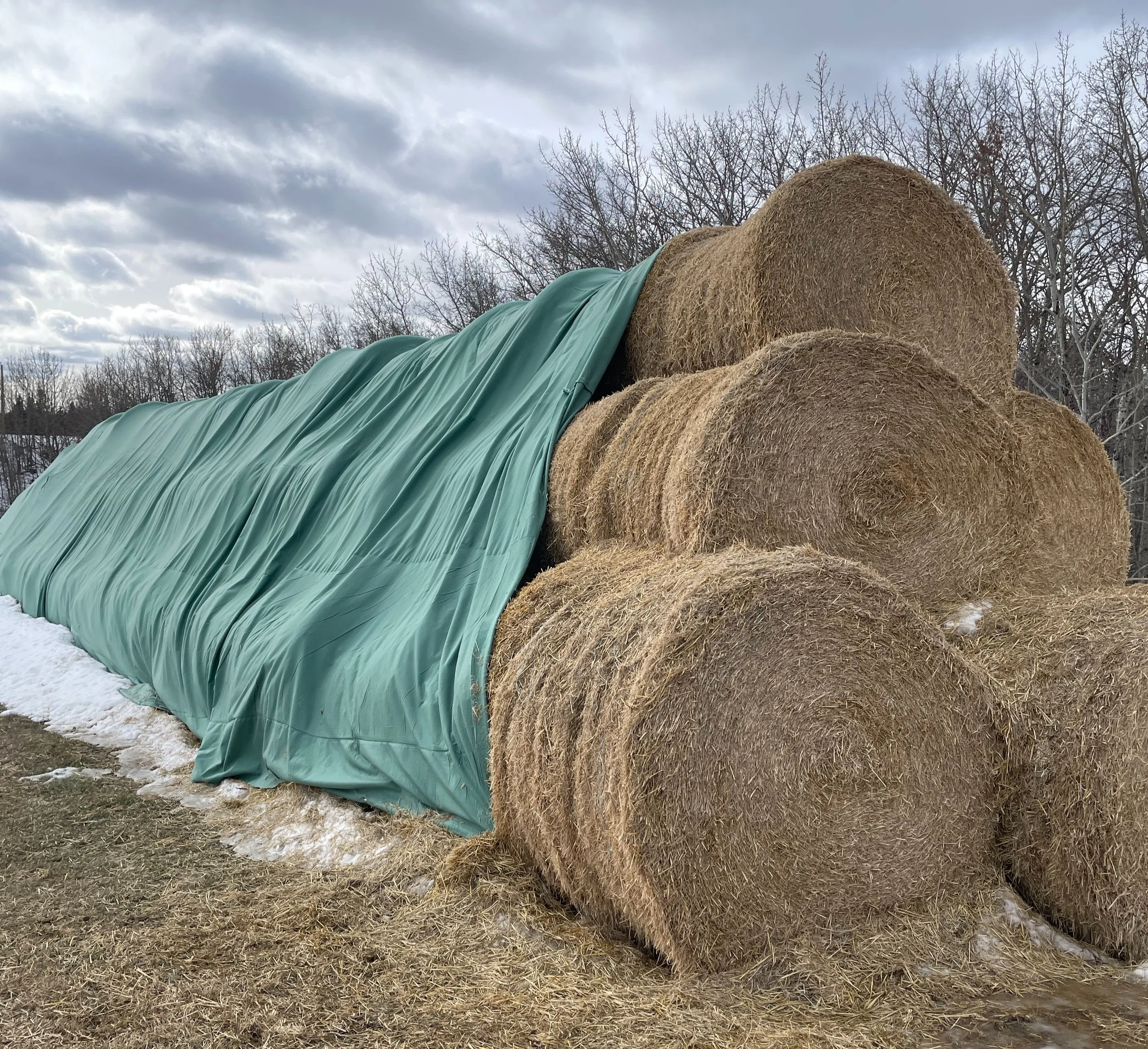
We know that Flortex® Bale Felt works on round bales: it resists rain, breathes to dry out moisture, and doesn’t blow off when secured because of this “breathability.” And it’s reusable for 3 to 5 years!

Curious to see if the same held true for square bales, we volunteer-covered (August 21, 2024) and uncovered (May 5, 2025) a large stack near Riverdale, California. The results were fantastic! We were primarily concerned about the bales on the very top, thinking that if there was spoilage, that’s where it would be. Photos and info were collected on May 5, uncovering day. Results were celebrated at a Cinco de Mayo lunch at Danny’s Donuts, Riverdale. Our friend Mike O’Hare, a 79-year-old retired veteran who accompanies Ron for fun some days directed from the ground.

Click through to our webpage to see and hear the whole story (a video story recorded by my correspondents Ron Kuber/Donny Rollin).

Here’s some stills to entice you.

THe stack after it was covered on August 21, 2024.

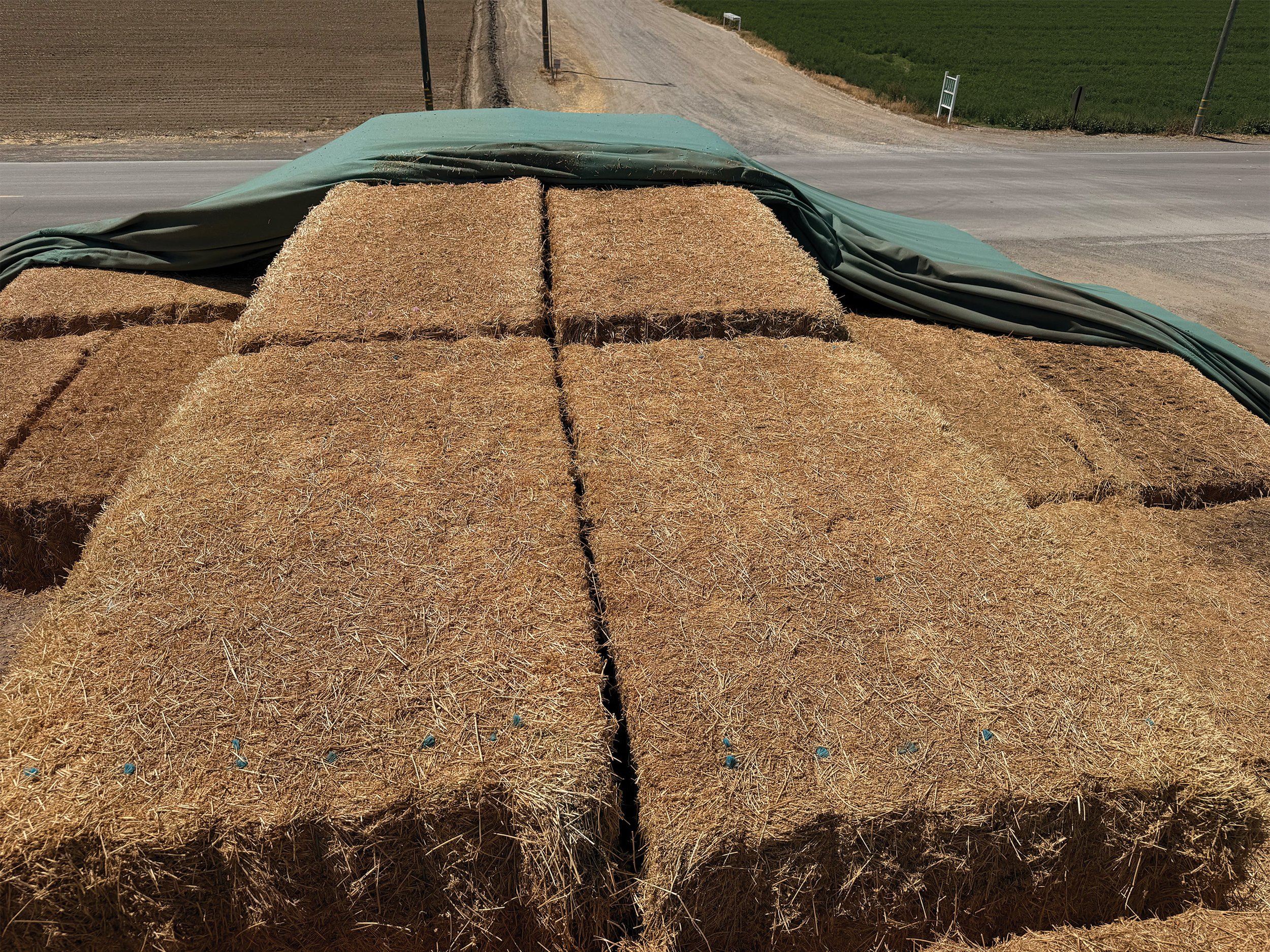
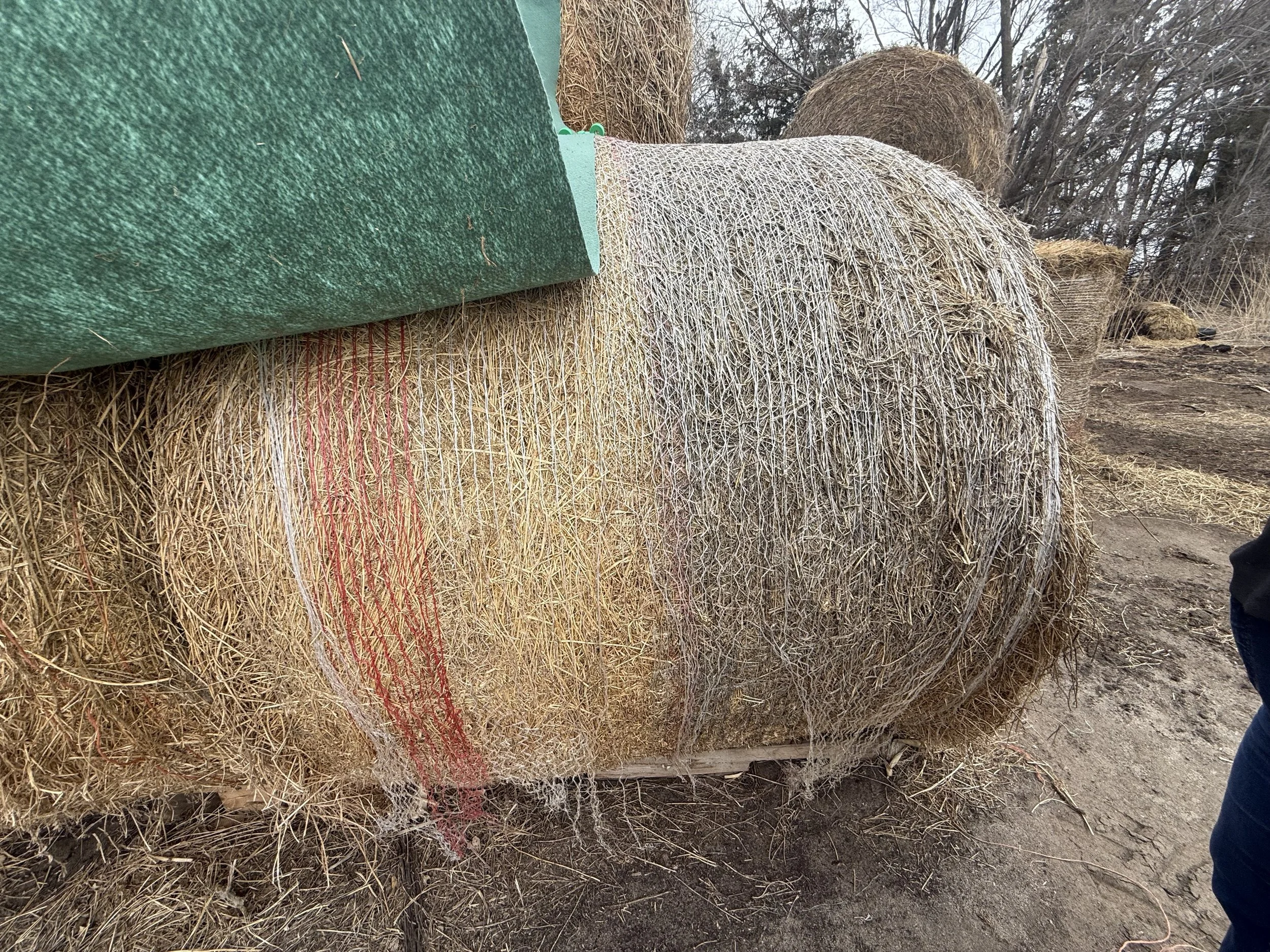
Looking forward on the stack - this hay was completely protected by the Flortex® Bale Felt. No mold.

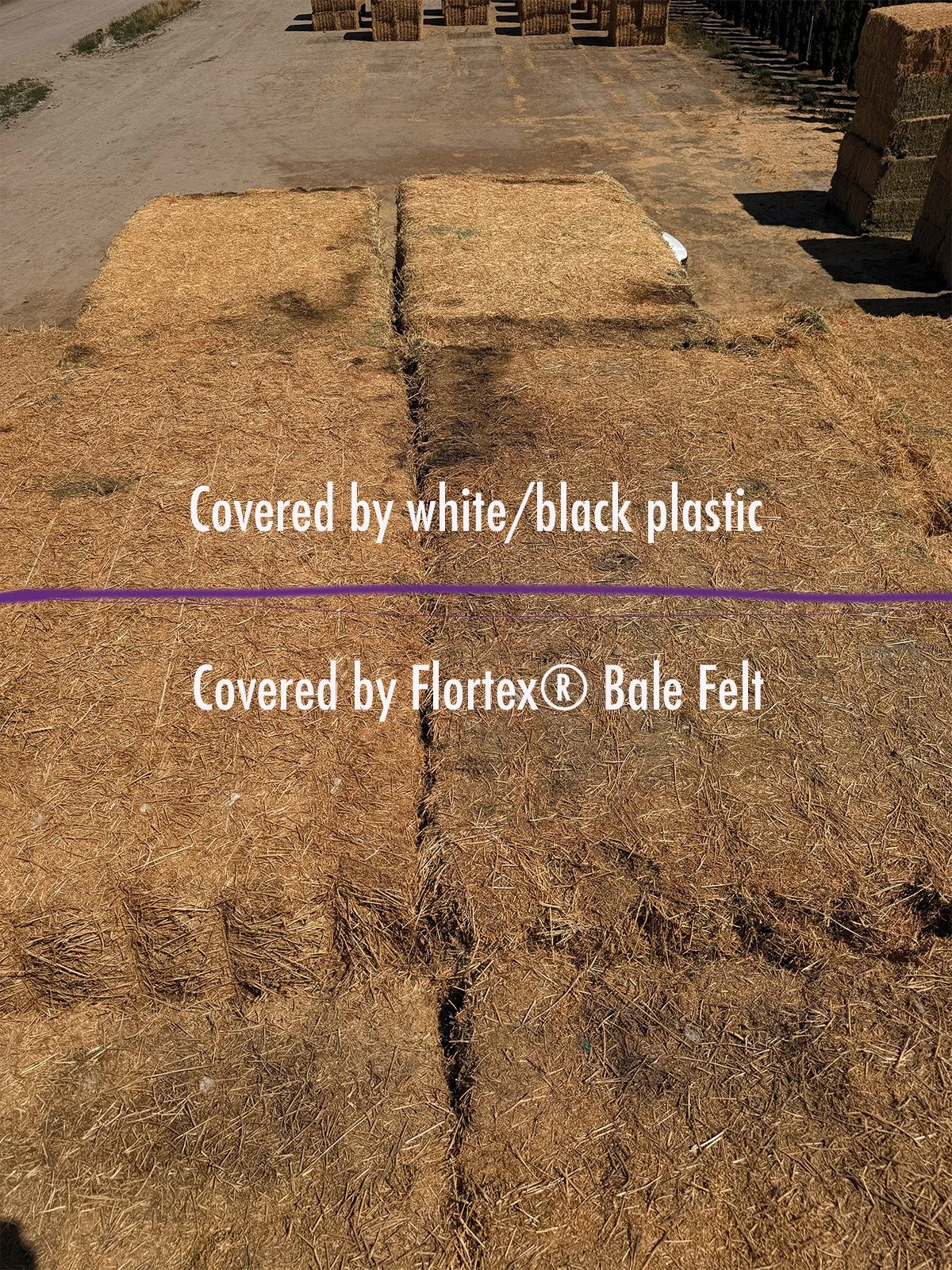
Looking back across the top of the stack, showing the damage that was done with ropes and tires (or birds) breaking through the plastic, allowing moisture to seep into the bales. those dark spots on the bales protected with Flortex is dirt and rocks, not mold. See the video for more.

Brace yourself

“Kids that grow up on farms and feedlots are generally taught basic rules for being around machinery, animals, equipment. But do we teach them about being safe around silage and other forages, or do we just assume they know the dangers and how to work around them?”

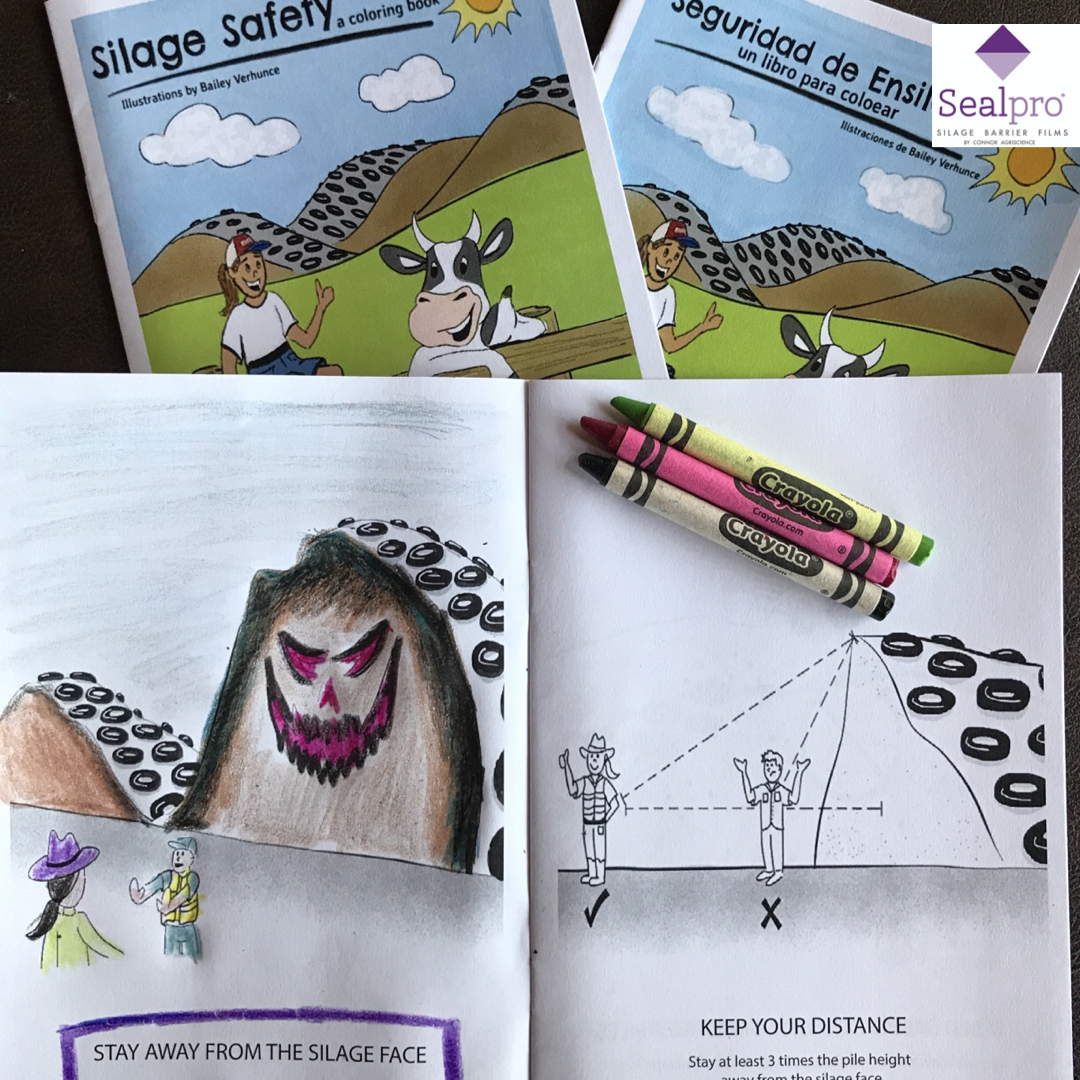
People of all ages benefit from the Sealpro Silage Coloring Book - it makes a perfect employee tailgate meeting, 4-H and FFA project meeting, and raises safety awareness of families and employees. And they’re free.

The kids are coming home from school, and you’re going to put them to work.

Before you know it, the kids will be trading school clothes for work clothes. With summer coming up, there’s plenty of work to be done at a farm or feedlot, and having a summer job builds character, responsibility, and savings accounts for all - from grade school through college. Having some safety training in place is important for everyone’s success. Our Learning Center has easy to watch videos on harvest and feedout safety.

A few years ago, Madeline developed a silage safety coloring book that hits all the high points and gets into details that adults could gain from too. Kids as little as 2 or 3 understand that silage pile and bunker faces are MONSTERS, and they shouldn’t go near them. (There are plenty of adults that need that reminder, too.) As they get older and are given more responsibility, kids should learn about safe silage handling, sampling, and that staying away from silo gas is a matter of life and death. The coloring book lays it all out, with a word search to boot - both in English and Spanish.

We offer the little books for free, and I have boxes of them in my office storage room, ready to get into the hands that need them. They make a great 4-H or FFA project meeting, a family resource, and yes, even an employee tailgate meeting. Write to me to get your free copies. Please note that these books are meant for people who live and work on the farm or feedlot.

It’s not just for chicken nuggets: checking DM with your air fryer

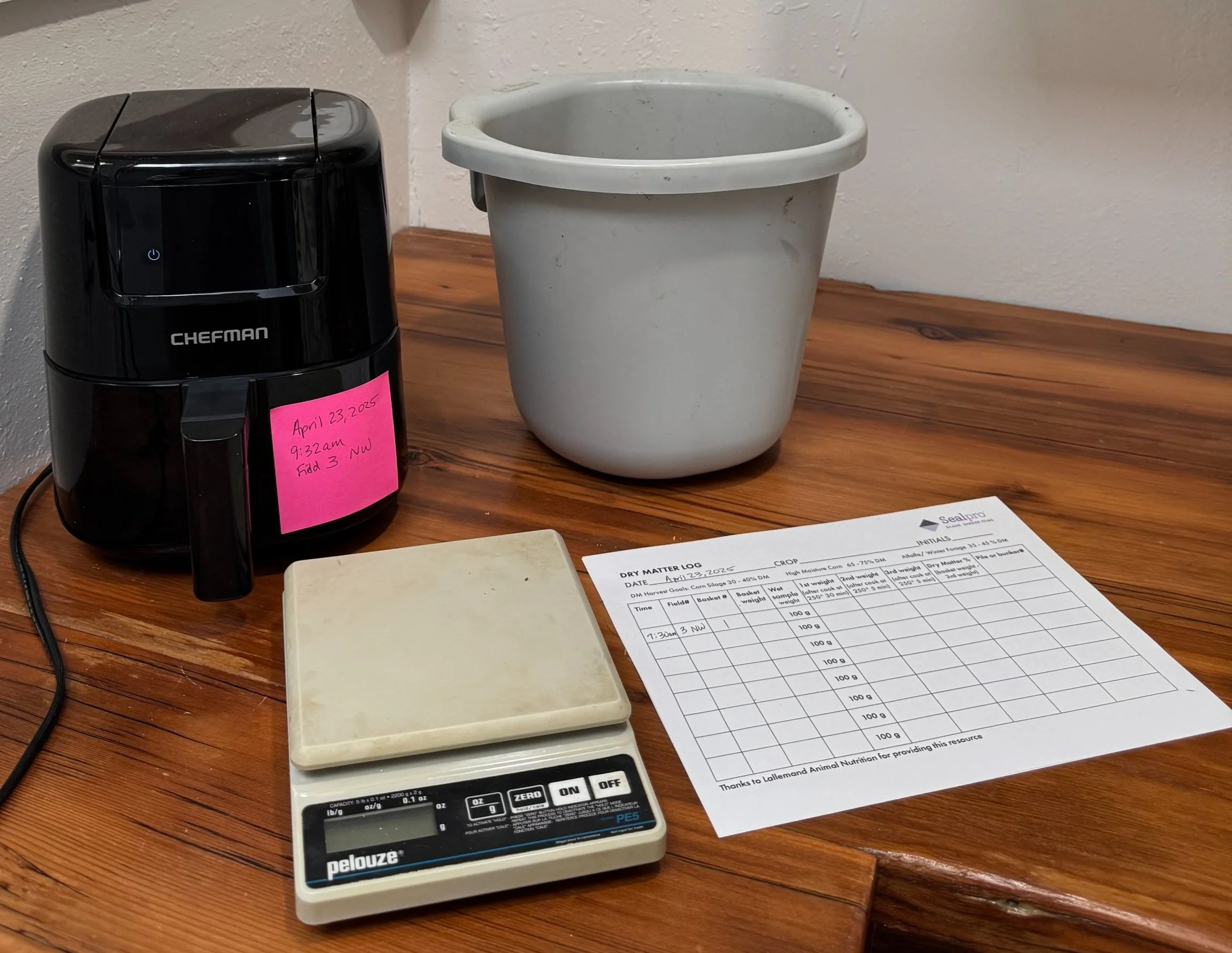
Dry Matter (DM) is important to silage harvest success. Here’s an easy way to check and record those stats, before and during harvest.

Why should we bother?

  • You get one chance to make sure a whole year’s worth of forage is harvested at just the right time. What if your future self could go back and see what was happening during harvest on a particular day? Could you learn from what the DM’s were running and the results you got?

  • Forages made at the correct DM ferment faster and better - testing them alerts us to potential pitfalls that can be fixed with a Magniva inoculant or by waiting to harvest. Weather changes DM throughout the day; let testing help you make decisions. And the old squeeze-in-hand isn’t always accurate.

  • Forages pack better when they’re in the right DM range, and packing density is a key factor in forage success. Common sense tells us that when forages are too dry, there’s more opportunity for oxygen to spoil, rot, and mold; even open the door up to mycotoxins. We especially see this in the outer three feet of piles and bunkers. Use Sealpro® to block oxygen coming in, but remember that the oxygen that’s in the pile due to bad packing is going to stay there. Getting the DM right is necessary. Getting the pile sealed in a timely manner (within 12 hours, max) is critical too, but that’s a topic for another newsletter…

Of course, checking DM is nothing new, but using an air fryer makes it easy and - dare I say - fun! So simple your fifth grader could do it (sounds like a great job). All you need is:

Watch the video, try the process a few times to get comfortable with the steps, and air fry away! Be sure to ask any one of our distribution agents for help.

The six-inch secret

Want to know how the best farmers make denser, safer, and nutritious forages?

They pay extra attention to dry matter and chop length, measuring throughout the day, and adjust as needed. They’ve got someone assigned to checking these values all day - it’s their top priority, and they speak up when a value isn’t falling within the preset guidelines. Spring crops tend to dry out quickly, and when they get too dry, they’re harder to pack. But you knew that.

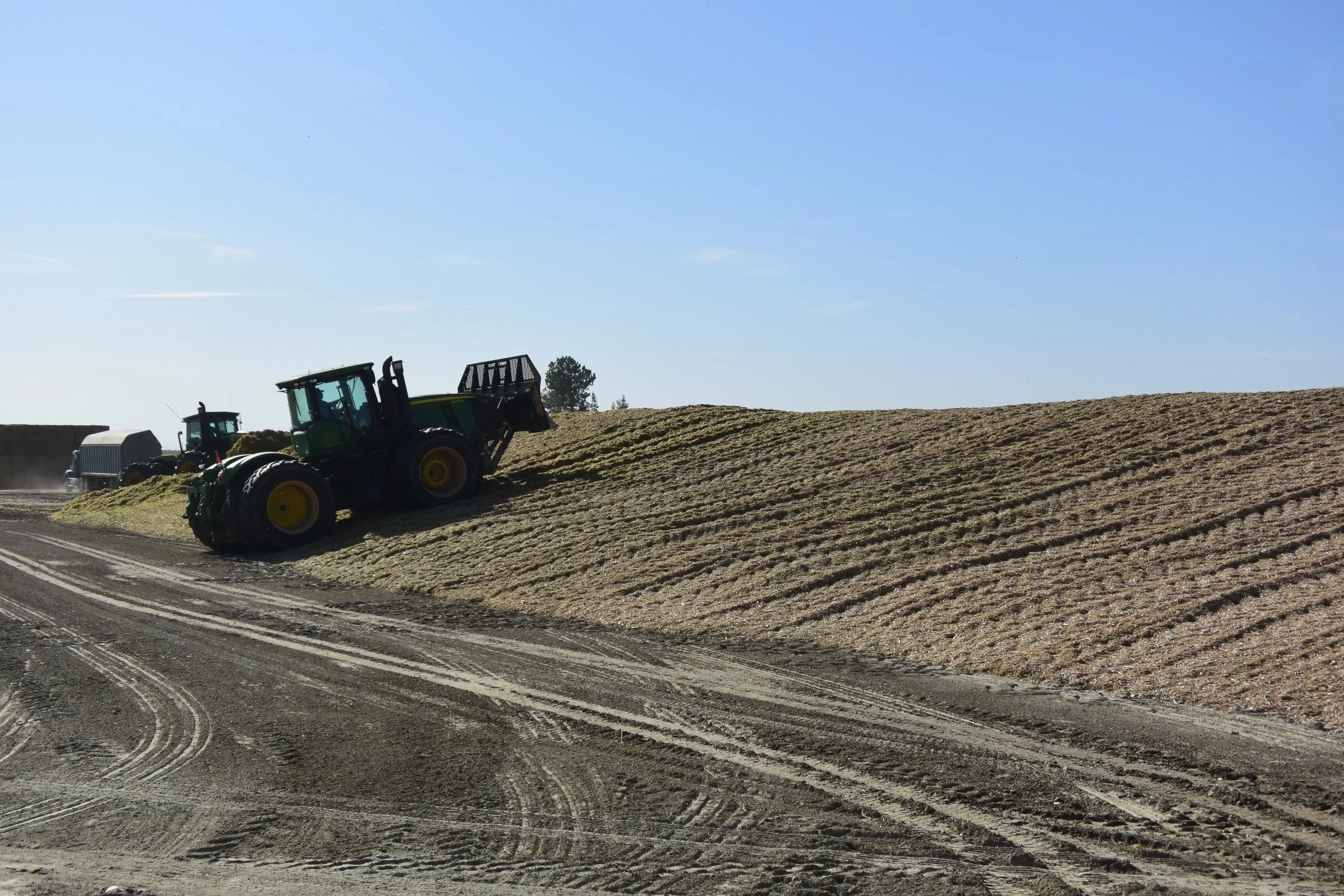
After forages pass inspection, they are bladed into a pile or bunker that has been carefully planned and boundaries are marked clearly ahead of time. There’s a blade tractor and an appropriately sized pack tractor (or 2 or 3 or 4, depending on the number of choppers in the field) waiting to layer that forage in - in six inch layers.

That’s the secret - layering just enough to get a dense pack - from the ground up. The more forage is packed and layered, packed and layered, the more money you’ll save after fermentation. Why? Because packing out oxygen is key to better fermentation, less spoilage, more ending inventory, better nutrition, and safer forage piles and bunkers.

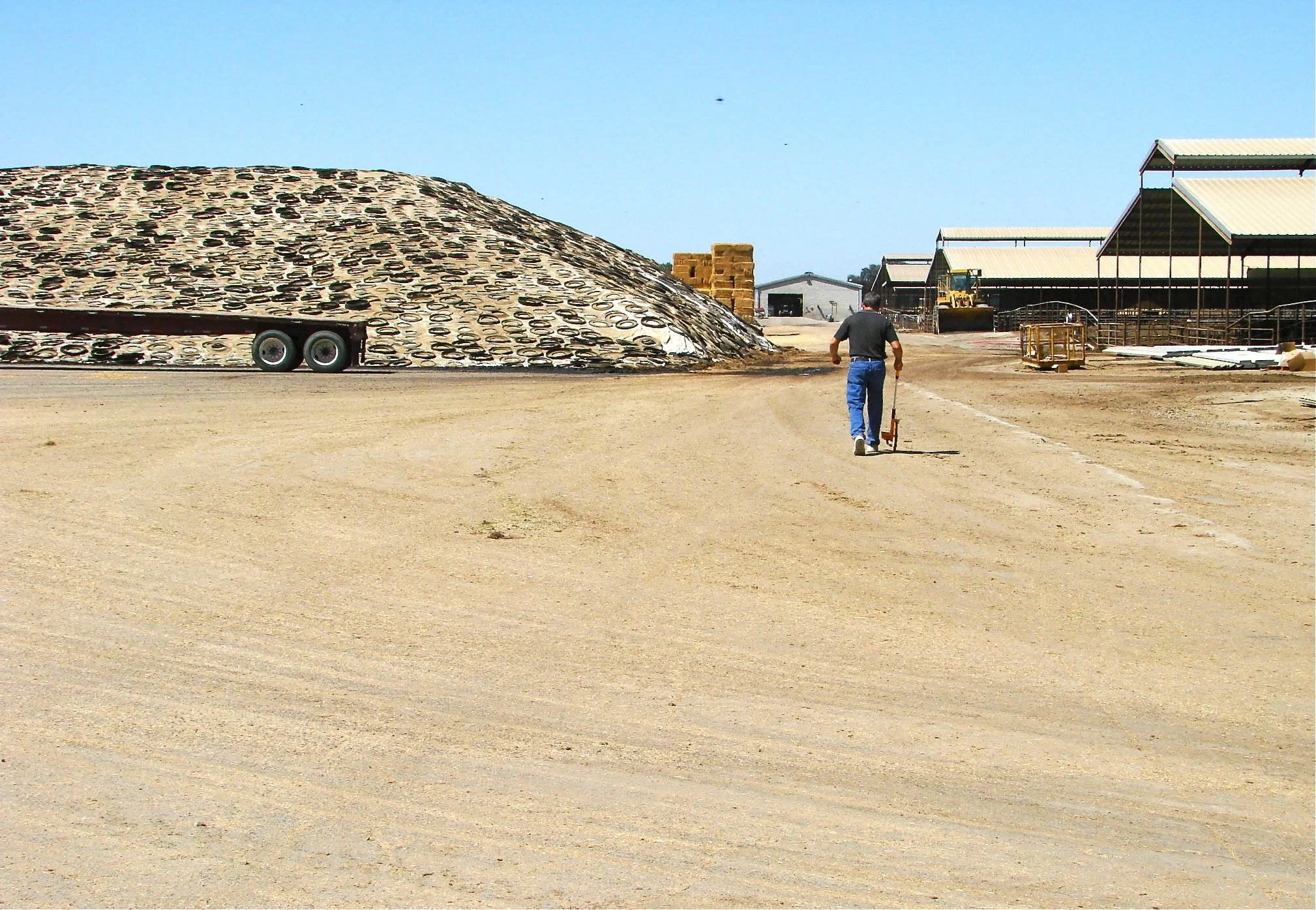
Look at the pile in the photo below: the blade has done the work of layering in, the pack tractor is doing it’s job of packing perpendicular to the blade, staying on the pile to make use of the tractor weight without dragging dirt into the field. There’s no tire tracks that go off the edge of this pile! Forward, reverse, repeat, at an even pace without digging wheels into the surface.

People who do a good job blading and packing are important! Now you know the secret too - if you need help figuring pile or bunker size, pack tractor weight, or have any other harvest question, be sure to call your Sealpro® distributor!

Take the early crop chop quiz!

Harvest has begun out here in the west, choppers whirring along cutting up a variety of winter forages, with that first alfalfa cut close behind. As things heat up across the country, everyone will be smelling that sweetness soon. Just for fun, take our 5- question harvest quiz - test your knowledge! Answers are at the end of this email.

  1. What is the recommended length of chop for winter forages and alfalfa?

    1. 3 inches

    2. 1 - 1 1/2 inches

    3. 3/8 to 1/2 inches

    4. 3/4 to 1 1/4 inches

    5. Boot length

  2. At what dry matter percent (DM%) should winter forages and alfalfa be harvested?

    1. 40 to 50 percent

    2. 35 to 45 percent

    3. 25 to 30 percent

    4. Really dry

    5. Really wet

  3. Who should be included in your preharvest meeting?

    1. Nutritionist

    2. Chopping contractor or chopper operators

    3. Person driving pack tractor

    4. Covering contractor or crew

    5. All of the above, with coffee and cookies provided

  4. Here are four safety tips - which one is most important?

    1. Plan and build a 1:3 or 1:4 drive over pile or bunker

    2. Shut off the chopper and remove the key when unplugging

    3. Wear safety clothing and make eye contact with chopper operator when approaching in the field.

    4. Don’t overfill bunkers or piles

    5. All of the above, all are important to send everyone home safely

  5. What is the best way to apply inoculant?

    1. Drive the wagon or truck under an overhead boom spray

    2. With a hand sprayer on top of the pile/bunker

    3. From a tank on the chopper that’s not insulated

    4. On the chopper - calibrated - from an insulated tank

    5. Throw it on the pile/bunker with a big bucket a day later

What grade did you get on the chop crop quiz?

Next Generation Bale Protection

Raise your hand if you’re feeding round or square large bales!

Large bales lose their value when left uncovered - rain, hail, sun exposure eat away at the valuable nutrients you expect to feed. Plastic covers are bulky to put on and hold in mold-forming moisture; they tear and end up in the field, the neighbor’s yard, or worse, in a grazing pasture. Sheds are expensive and sometimes impossible to build. There’s an easier way to preserve hay for longer: Flortex® Bale Felt.

See the difference®… in feed quality and quantity

Introducing Flortex® Bale Felt – the advanced simple solution designed to safeguard your baled forage investments like never before.

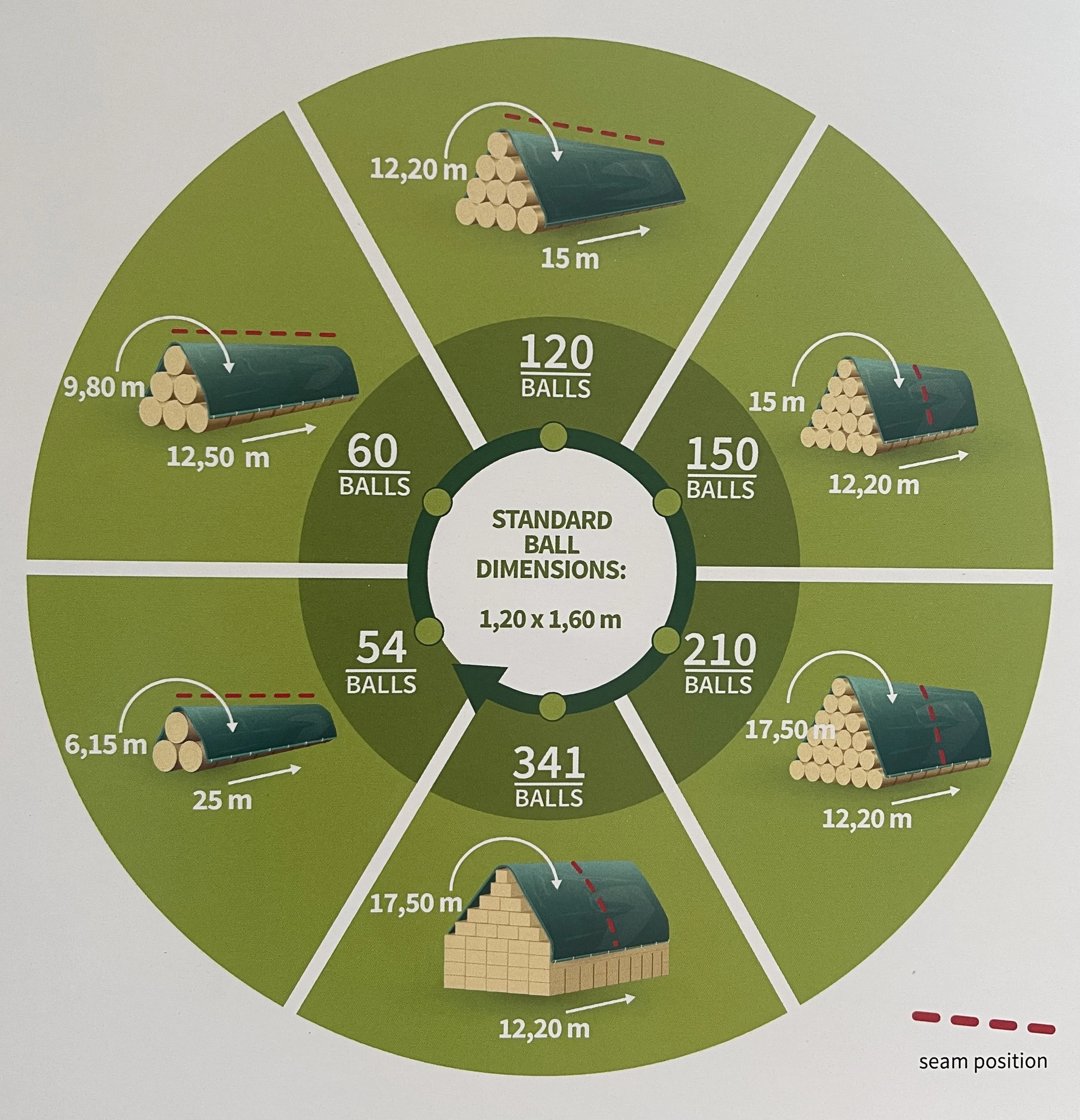
  1. Easy to apply and suitable for various bale sizes and types, this protection method integrates seamlessly into your existing practices. No complicated setups or additional equipment are required—just a straightforward solution that delivers results.

  2. Rain sheds off the stack plus Flortex® bale Felt is breathable, allowing air to move through, staying on the pile, further drying and protecting your valuable crop.

  3. Reusable 3 to 5 years. It’s got “sustainably functional” written all over it.

    Learn more about Flortex® Bale Felt here. Make the smart choice for your farm’s future. Control the controlables. Call us today to get yours. Mention this newsletter, get a free set of green augers.

Flortex® cones in a variety of sizes - there’s one for your system!

Square bale stack in California - stay tuned for results

To-Do: Make a Harvest Plan

Plan ahead for better density in your pile and bunker through proper dry matter, chop length, layering, pack tractor weight, and delivery to storage.

It’s never too early to think about harvest. See our 12-Step Silage Success article in the June 2024 issue of Feedlot Magazine.

Silage is an integral part of your herd’s ration. Whether you grow it yourself or buy it from a neighbor, taking care of this valuable ingredient is worth the attention to detail. When harvested and stored correctly, you’ll benefit in three ways:

More inventory — the bunker or pile lasts longer with more tonnage and fewer feed losses. Every inch of discolored (black, tobacco brown, or carmel-colored) started as 4 inches of [insert $$ per ton you paid] potential inventory.

Better nutrition — it makes sense that cattle will eat more, milk better, and have less rumen upset when fed a higher-quality feed. Make good use of every pound of nutrition you’ve paid for.

Safer working area — silage bunkers and piles are dangerous places, but if we build them correctly, we can increase their density and decrease height, which can help avoid avalanches and falls.

No matter how many harvests you’ve done, there’s always something new to learn and improvements to make.