
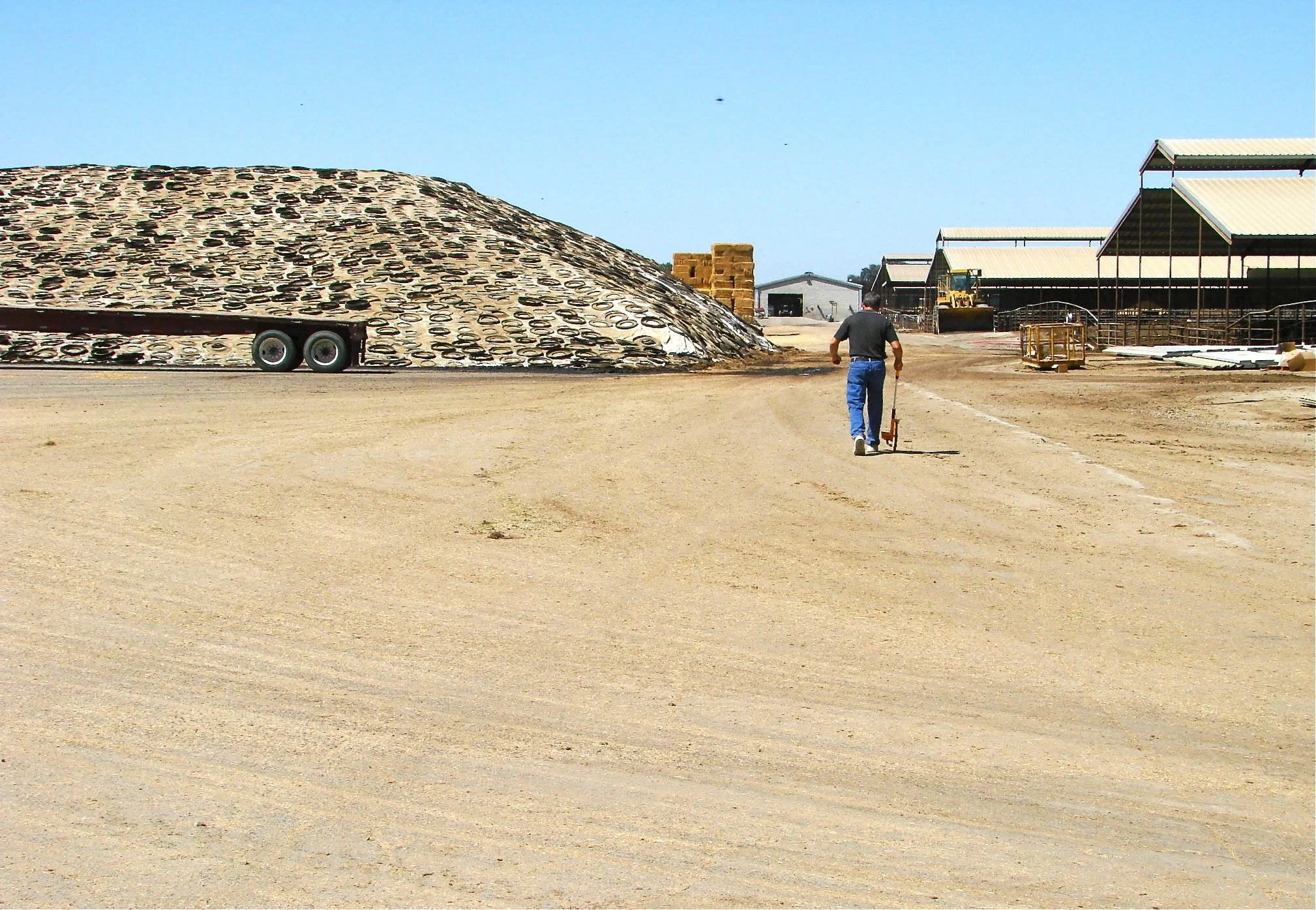
When planning your silage harvest, one of the most important questions to answer before the first load rolls in is: How big does your silage pile need to be? If it’s too small, you’ll run out. If it’s too big, you risk spoilage, shrink, and unsafe feedout. We help farmers get this right—because it affects your entire feeding season.
For those with bunkers, you know how much tonnage you can fit into your space - but what if there’s a bumper crop or your neighbor wants to sell theirs to you and you have extra? Rather than pile it dangerously high, make a separate, smaller drive over pile.
Start with your daily feedout needs. How many pounds of silage (as-fed) do you feed per day? Multiply that by the number of days you’ll feed this forage. That’s your annual tonnage requirement.
Next, calculate your pile dimensions based on your storage and feedout goals. Here’s a simple way:
Width: Usually dictated by your equipment, but aim for at least 14 feet wide per 100 cows (or equivalent number of beef animals).
Height: Keep it safe and manageable—12 to 14 feet is typical for drive-over piles, but never higher than your unloading equipment can reach.
Length: This is where you hit your tonnage target. Use this formula:
Tons = Length × Width × Height × 35 ÷ 2000
(That “35” is the average pounds per cubic foot of packed corn silage at 35 % dry matter or 65% moisture.)
You’ll also want to ensure you can feed off at least 6 inches per day in winter (and 12 inches in summer) to avoid spoilage from oxygen intrusion. That means the face width must match your daily feed volume.
Seal it tight with Sealpro oxygen barrier film to protect your hard work. Our films conform to the pile’s shape, prevents air from entering, and reduces dry matter loss and spoilage—so you get more, better, safer feed.
Need help with pile size planning? We are here to walk your feed area with you. After all, bringing new science to the farmer means making sure every load of feed counts.
Visit sealprosilage.com for tools, resources, and support to get your pile just right this harvest.